
By Tahra Goraya, President and CEO, Monterey Bay Economic Partnership
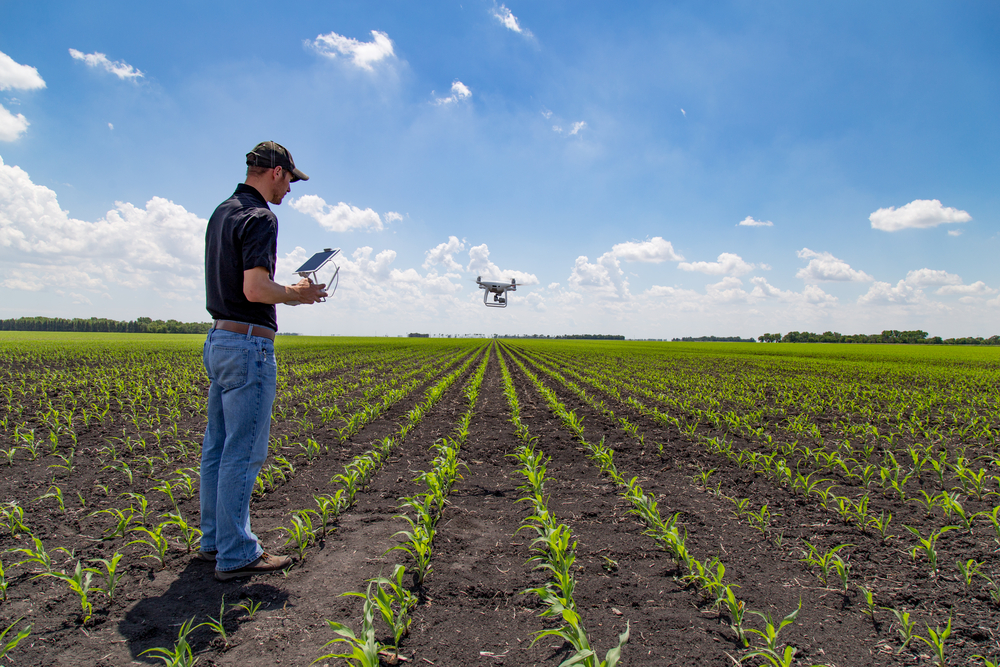
(Oct. 9, 2026 — Marina, CA) — Drive through the Salinas Valley this fall and you might not notice it from the highway, but artificial intelligence is already at work here. Automated weeders are moving down strawberry rows. Harvesting technology is being put to the test in celery fields. In the region that helps feed the nation, AI isn’t a forecast. It’s a working tool, and it’s getting its boots dirty.
In my role leading the Monterey Bay Economic Partnership, I see enormous promise in this moment. Our growers face real and mounting pressures: tight labor markets, rising costs, and water supplies that can’t be taken for granted. AI can help them do more with less, whether that’s a robot handling the most back-breaking field work or a model that predicts groundwater conditions before a planting decision is made. But promise isn’t the same as progress. The real question is who benefits. Will the families who have worked these fields for generations share in the gains, or will they be left on the sidelines of an economy being built around them?
Late this summer, I joined Congresswoman Zoe Lofgren and leaders from higher education, industry, and economic development for a roundtable at San José State University on how AI is reshaping California’s 18th Congressional District. What struck me most was how naturally the conversation bridged Silicon Valley and the Salinas Valley. Too often these two regions are talked about as separate worlds. They aren’t. They share a congressional district, a workforce, and increasingly, a technology base.
That technology base is growing here at home. Our region is now home to roughly 20 agricultural technology startups working on everything from field robotics to predictive groundwater modeling, and investment in the sector is climbing. This is homegrown innovation, built by people who understand the soil, the crops, and the constraints our growers face every day. It deserves to be treated as the economic asset it is.
But an ag-tech economy is only as strong as the workforce behind it, and that starts in our classrooms. Hartnell College has shown what’s possible, connecting young people from farmworking families to careers in the industry. The next step is expanding ag-tech engineering pathways, including farm robotics training connected to UC Agriculture and Natural Resources and MBEP. The young people who grew up in these fields, many of them bilingual and the first in their families to attend college, should be the engineers, technicians, and entrepreneurs who design, program, and repair the machines working those same fields. That requires pathways that begin in high school, run through our community colleges and universities, and are built with the families they’re meant to serve, in the languages those families speak.
None of this works without infrastructure, and at our roundtable, one gap came up again and again: broadband. Precision agriculture runs on connectivity. A soil sensor can’t report back from a field with no signal. A student can’t finish a robotics course online from a home with no reliable internet. Across rural California, persistent broadband gaps are holding back both our farms and our students. Closing them isn’t a luxury; it’s the foundation everything else depends on.
We also have research assets many regions would envy. Our district’s longstanding partnership with NASA Ames, and San José State University’s wildfire research collaboration with NASA and NOAA, could be put to work on challenges like water conservation that matter deeply to Monterey County agriculture. Connecting that research capacity to growers and startups on the ground is exactly the kind of bridge-building our region should prioritize.
Policymakers have an important role to play, and they can help or they can make this harder. Right now, growers and ag-tech startups are navigating an uncertain and fragmented landscape of evolving state and federal proposals on AI. Thoughtful guardrails matter. But rules written with the largest technology platforms in mind can land hardest on a small robotics startup in Salinas or a family grower trying to adopt a new tool for the first time. Rushed or overbroad mandates risk stalling the practical, on-the-ground experimentation that rural innovation depends on, and the communities that pay the price are rarely the ones at the table when the rules are written.
What would help is investment where it counts: broadband that actually reaches agricultural communities, sustained support for workforce pathways at community colleges and public universities, and research partnerships that link federal science to the problems our growers face. As Washington shapes the policies that will define America’s AI future, agriculture, and the rural workforce behind it, need to be part of that conversation.
The roundtable with Congresswoman Lofgren reinforced for me that AI innovation, education, and economic opportunity can’t be addressed separately, and neither can our two valleys. The path forward is clear: build pathways that turn farmworking families into ag-tech careers; close the broadband gap once and for all; connect our world-class research institutions to the fields that need them; and craft policy that protects people without paralyzing the innovators working to solve real problems.
The technology is already in our fields. Now we need to make sure our people are ready to lead it.
Tahra Goraya is President & CEO of Monterey Bay Economic Partnership (MBEP), a regional member-supported nonprofit organization whose mission is improving the economic health and quality of life in Monterey, San Benito and Santa Cruz counties.