
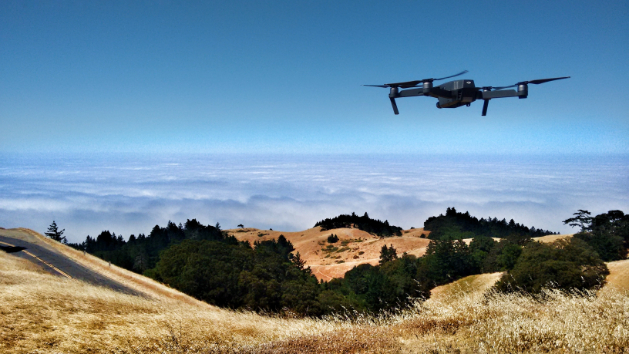
The future of flight is here —and the Monterey Bay region is already helping build it.
Uncrewed aircraft systems, commonly known as drones, and advanced air mobility, including electric vertical takeoff and landing aircraft, are moving rapidly from concept to commercialization. What once sounded like science fiction is now being tested, manufactured and flown in communities across the country — including right here in Monterey, Santa Cruz and San Benito counties.
The economic implications are significant.
Drones are already being used for infrastructure inspection, agriculture, public safety, emergency response, defense and increasingly sophisticated autonomous operations. Meanwhile, eVTOL aircraft are advancing through certification and real-world flight testing for potential applications ranging from passenger transportation and cargo to medical response and disaster relief.
The federal government is accelerating this transition. In 2025, the administration directed the Federal Aviation Administration to expand advanced drone operations, accelerate beyond-visual-line-of-sight capabilities, make greater use of UAS test ranges and establish an eVTOL Integration Pilot Program. In 2026, the FAA selected eight public-private partnerships for that program, creating one of the largest real-world testing environments for next-generation aircraft in the world. The agency has also expanded its BEYOND program to support additional advanced drone operations.
The state, through the California Jobs First Regional Investment Initiative, funded the California Advanced Air Mobility Corridors Initiative. Led by the Monterey Bay Economic Partnership, the historic investment of $7.45 million will develop California’s first FAA-compliant multi-airport AAM corridor network connecting Watsonville, Marina, Salinas and Hollister. The goal is to establish the infrastructure and operating environment needed to test and ultimately scale advanced aircraft and drones across the region.
The Central Coast leads the nation in autonomous systems and advanced air mobility, boasting a six-county ecosystem of more than 7,000 firms and 80,000 jobs across its broader aerospace and autonomous systems value chain. A new regional prospectus released by Uplift Central Coast — a coalition convened by REACH, the Monterey Bay Economic Partnership, and the Economic Development Collaborative — entitled The Central Coast: Built to Prove What’s Next, highlights this competitive advantage. The report catalogues the area’s dense concentration of market-leading companies, specialized talent, research institutions, advanced manufacturing, and real-world testing environments designed to advance next-generation aircraft, drones and uncrewed aircraft systems.
This is no longer simply an aviation story.
The scale of investment is significant. Skydio announced plans in 2026 to invest $3.5 billion in U.S. manufacturing, R&D, and domestic supply chains, projecting more than 2,000 new jobs and thousands more across its supply chain. In advanced air mobility, Joby Aviation is expanding production in California and Ohio and has established a strategic manufacturing partnership with Toyota. Archer is advancing FAA certification, expanding into defense applications and has been selected as the official air taxi partner for the LA28 Olympic and Paralympic Games.
Some of the most consequential activity, however, is happening right here on the Central Coast.
Marina is becoming an important center for Joby’s manufacturing and testing, including its 226,000-square-foot facility completed in 2025 and plans to expand California production capacity.
Hollister is home to Wisk’s flight-testing program for its sixth-generation autonomous eVTOL aircraft. Wisk completed the aircraft’s first flight there in December 2025 and continues testing and building a vertiport.
Salinas has served as Archer’s flight-test base since 2021. Archer’s Midnight aircraft has completed piloted round-trip flights between Salinas and Hollister and between Salinas and Monterey, demonstrating the region’s potential as a connected testing environment for electric aviation.
Watsonville is the base for the Joby Aviation Academy, which is training the next generation of pilots and aircraft maintenance and support professionals. The company’s flight research/R&D facility supports research, testing, and engineering for its eVTOL air taxi operations.
The region is a living laboratory for the infrastructure, workforce, and systems these aircraft will require — from airports and charging infrastructure to airspace integration, communications, safety systems, technicians, engineers and new aviation operations. And CAAMCI in the Monterey Bay region is a strong testament to the ecosystem here.
The opportunity is not simply to build aircraft. It is to build an entirely new regional economic ecosystem around them.
That matters because innovation doesn’t become an industry simply because an aircraft can fly.
It needs places to test.
It needs charging and communications infrastructure. It needs vertiports and ground systems. It needs airspace integration, safety protocols and reliable data. It needs manufacturers, suppliers, engineers, technicians, pilots and operators. And it needs communities that understand how the technology can serve real public needs.
The Central Coast has many of these ingredients already.
We have agricultural operations that can benefit from precision drones and autonomous systems. We have rugged terrain, wildfire risk and remote communities where aerial technology can improve emergency response. We have world-class universities and community colleges. We have defense installations and national-security expertise. We have four regional airports connected by the emerging CAAMCI network. And we have companies developing some of the world’s most advanced aircraft.
The opportunity is to connect these assets.
And the workforce opportunity is just as important as the technology.
It also creates an opportunity to make sure the benefits of this new economy extend beyond the companies building the aircraft.
We should be asking: How can drones help a farmer use less water? How can an autonomous aircraft deliver medical supplies during a wildfire? How can aerial systems inspect infrastructure without putting workers in dangerous conditions? How can AAM connect communities without requiring another highway? How can this technology create good jobs for Central Coast residents?
These are economic-development questions.They are also questions of resilience, access and public benefit.
The region should not wait until the aircraft are commercially mature to begin building the ecosystem around them. By then, other regions will already have established their testing infrastructure, workforce pipelines, supply chains and investment networks.
Our competitive advantage is that we have a head start.
But a head start is not a guarantee.
The Central Coast needs continued investment but also needs to ensure that smaller communities and local entrepreneurs can participate alongside larger technology companies. And we need to make safety, cybersecurity, environmental stewardship and public trust fundamental to how this industry develops.
The skies above us are becoming an economic frontier.
Railroads connected communities. Highways transformed commerce. Broadband changed how we communicate and work. Advanced air mobility and autonomous aviation could become another layer of economic infrastructure — if we build it thoughtfully.
For the Monterey Bay region, this isn’t about chasing the next shiny technology.
It is about recognizing an industry that is already here, connecting the assets we already have, preparing people for the jobs that are coming, and making sure innovation translates into broad-based regional prosperity.
The future of flight is no longer somewhere over the horizon. It is being tested in Hollister, manufactured in Marina, connected through four regional airports, researched in our universities — and built by people across the Monterey Bay region.
Tahra Goraya is the president and CEO of Monterey Bay Economic Partnership, a cross-sector, member-supported nonprofit organization working at the intersection of government, community and business to improve the economic health and quality of life in the tri-county region of Monterey, San Benito, and Santa Cruz. Goraya is also a board member for California Forward and a commissioner for the California Commission on Asian and Pacific Islander American Affairs. Send questions or comments to: [email protected].